

Adversity to triumph
How does a leader transform adversity into a defining moment of triumph?
When faced with an unexpected crisis, will you rise to the occasion or default to your preparation?
These questions lie at the heart of leadership, especially for women in high-impact roles.
The Story of Captain Tammie Jo Shults
When Captain Tammie Jo Shults safely landed a severely damaged Southwest Airlines aircraft in 2018 after an engine explosion tore through the fuselage, the world called it heroic. It was not heroism. It was disciplined preparation.
As a young woman, Shults was repeatedly told “no.”
No, women do not fly fighter jets.
No, that career is not for you.
No, choose something more appropriate.
She persisted, eventually earning her place in the United States Navy.
There, she expected to teach Advanced Aerial Gunnery.
Instead, she was assigned to instruct Out-of-Control Flight Recovery.
Not prestigious. Not glamorous. But decisive.
Years later, when catastrophe struck at 30,000 feet, that “lesser” assignment became the difference between panic and precision.
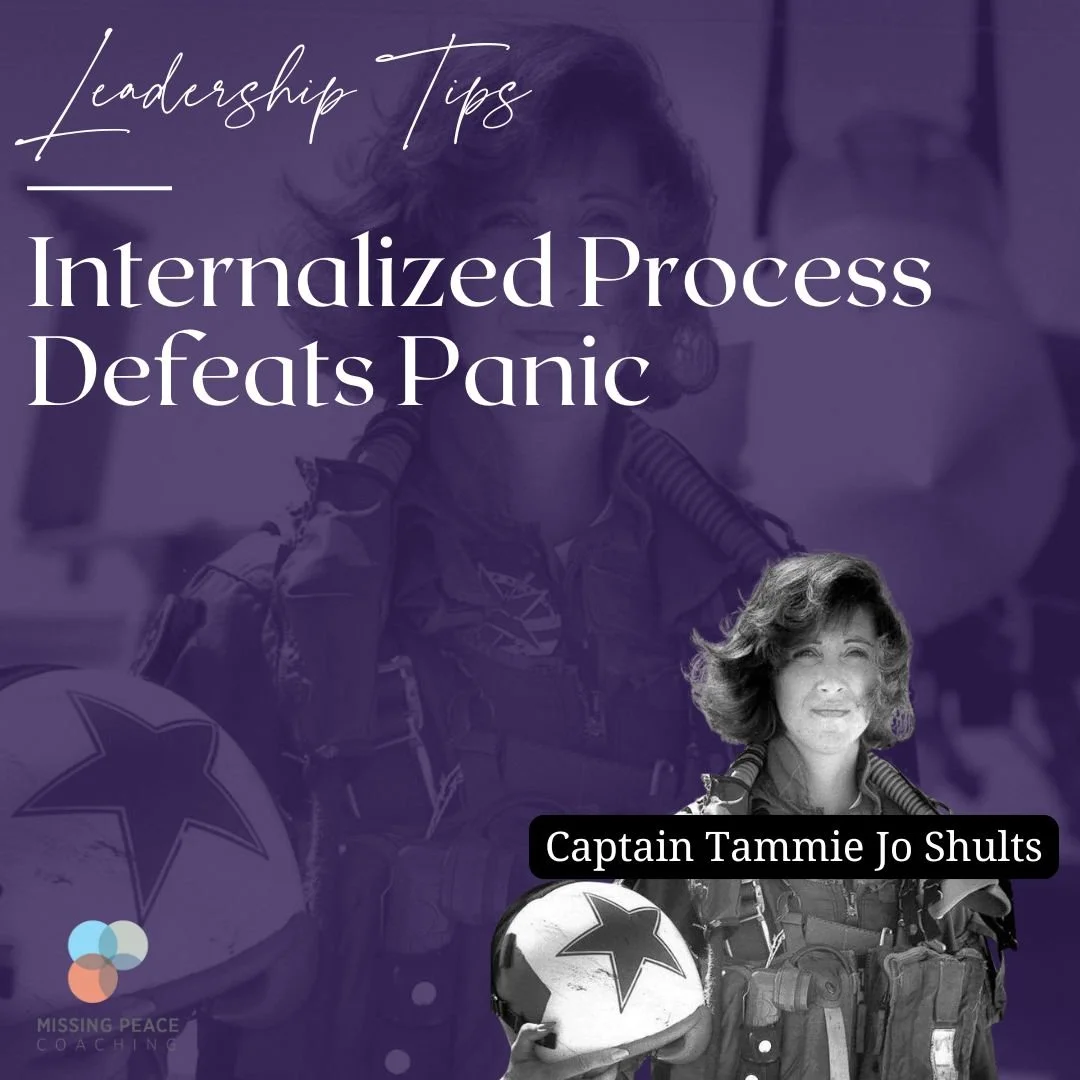
Leadership Principle #1:
Internalized Process Defeats Panic
The Navy’s operational mantra: aviate, navigate, communicate. A simple sequence. A disciplined hierarchy of focus. Maintain control. Understand position. Then communicate. Under extreme pressure, leaders do not invent brilliance. They execute an internalized process.
Senior women leaders often believe they must appear composed at all times.
Shults articulated something more sophisticated: “I learned that I don’t have to be in control all the time to get back into control.”
That is executive maturity.
Control is not rigidity.
It is the recovery capacity.
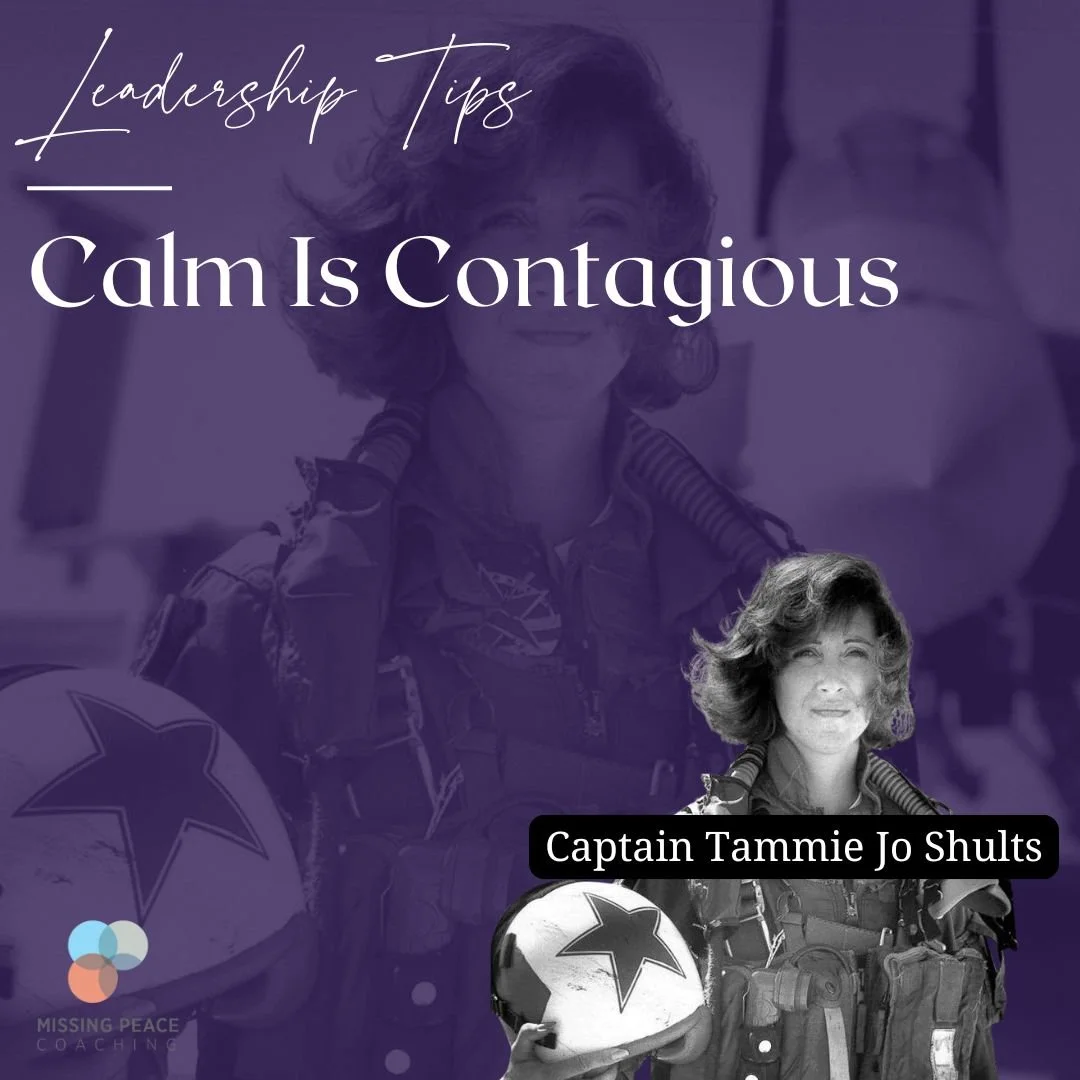
Leadership Principle #2:
Calm Is Contagious
Shults worked in full partnership with her co-pilot. She communicated clearly. She assessed what was working before fixating on what was failing. Her tone to passengers was calm and assured — not falsely optimistic, not dramatic.
The result?
Passengers stabilized. Crew focused. Ground teams prepared accurately.
This is systems leadership. Emotional regulation at the top becomes behavioral regulation throughout the organization.
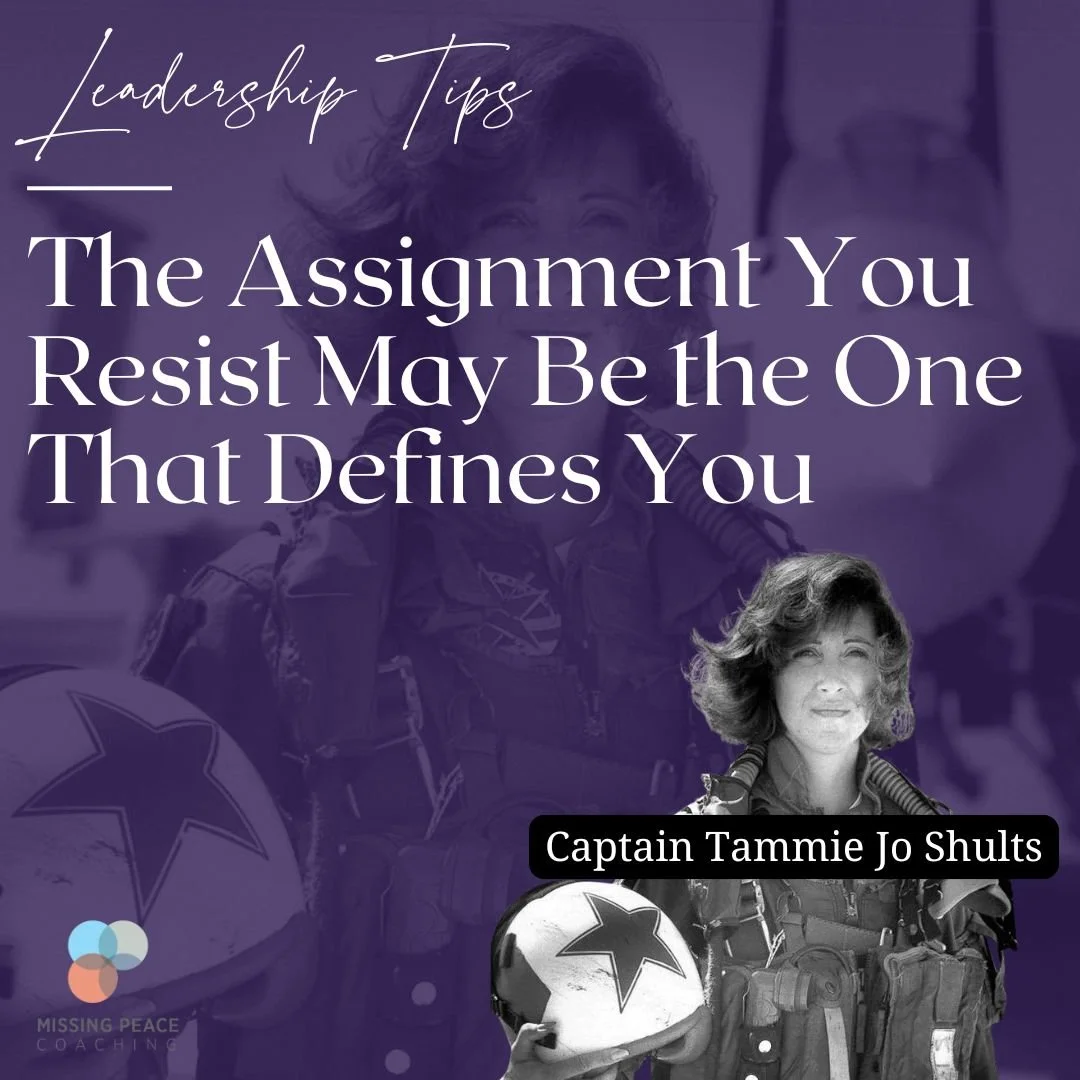
Leadership Principle #3:
The Assignment You Resist May Be the One That Defines You
Many high-achieving women I work with carry quiet resentment over roles that felt beneath them, overlooked promotions, or assignments that seemed misaligned with their ambition.
Shults’ out-of-control flight training was not her first choice. It was her defining preparation.
The question for leaders is not: Why did this happen to me?
The more powerful question is: What capacity is this building in me?
Resentment blocks refinement. Mastery requires both.
Resentment blocks refinement. Mastery requires both.
The Deeper Leadership Question
International Women’s Day celebrates visibility.
But leadership is built in invisibility — in discipline, in preparation, in private standards long before public recognition.
Women lead daily. Not through slogans.
Through practiced excellence. Through composure under scrutiny. Through operational clarity when the stakes are high. The real work is not proving others wrong.
It is building the internal architecture that allows you to lead when everything is at risk.
Your pivotal shift
Consider the challenges you've faced in your own leadership journey.
What 'no' has prepared you for your next pivotal moment?
Share your story in the comments and inspire others with your journey.
Next time you face an unexpected challenge, ask yourself: What capacity is this building in me?
Embrace it, and let it define your leadership path.